


Sign in to rate this tool.
Overview
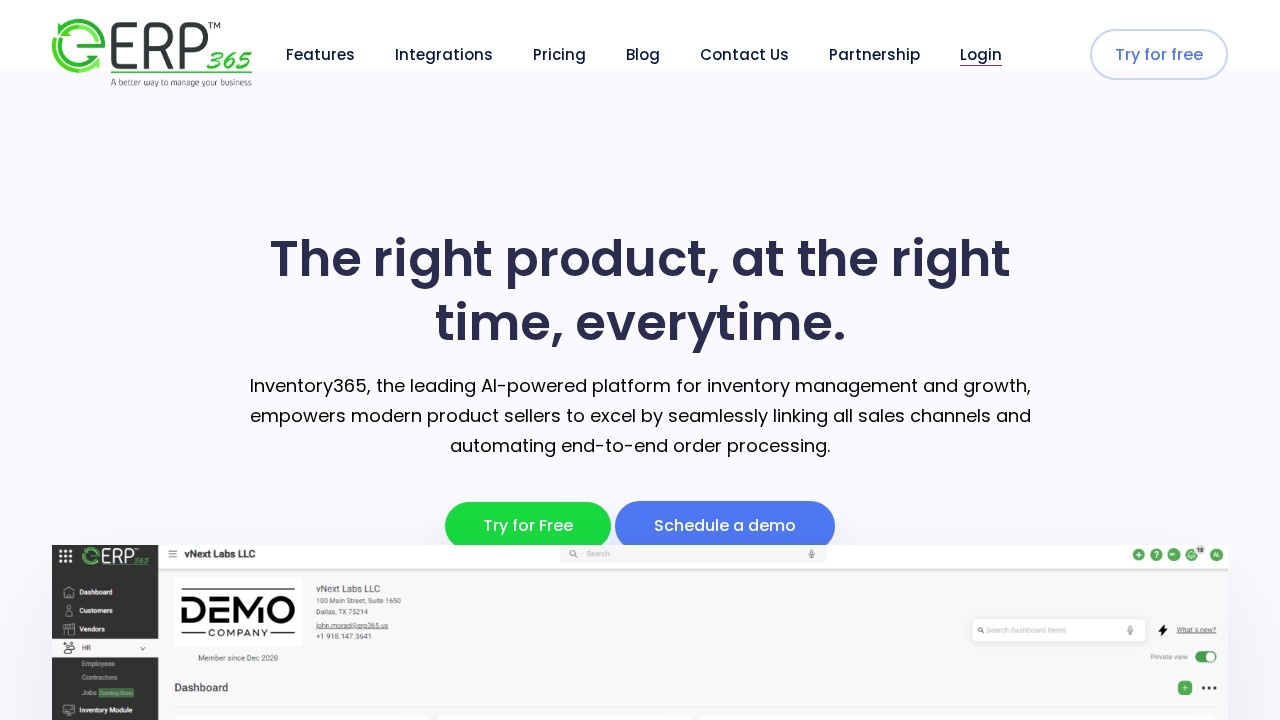
Inventory365 is an online inventory management tool aimed at businesses that sell products through multiple channels. The platform promises to connect marketplaces, e‑commerce sites, and shipping carriers into a single interface, and to use artificial intelligence to automate order processing, forecasting, and pricing decisions.
For sellers who keep separate product listings on Amazon, eBay, Shopify, or a proprietary website, Inventory365 says it can import inventory levels, sales orders, and customer data from each channel. The inputs are usually CSV feeds or API connections that the tool pulls on a scheduled basis. After the data arrives, the system displays it in a unified dashboard, where you can see real‑time quantities, sales history, and open orders. From there, you trigger automated workflows: orders are routed to the most appropriate warehouse, batches are created for shipping, and labels are printed directly from the platform. Shipping label creation is linked to carrier APIs, so the output is a ready‑to‑print PDF. The tool claims that these steps reduce manual data entry and shorten fulfillment times.
Warehouse teams can use Inventory365's dedicated module to design custom picking and packing workflows. The interface allows you to create labeling schemas and to set up rules for where items should be stored. Mobile scanning devices are supported, so workers scan items during receiving or picking, and the system updates inventory counts in real time. The output of each scan is an updated quantity displayed instantly on the dashboard. The software also offers optimized algorithms for picking routes, which aim to cut travel distance inside the warehouse.
Analytics in Inventory365 let you build reports and dashboards. You provide specific KPIs, such as inventory turnover, profit margins, or order accuracy, and the tool aggregates data from sales and inventory records. The output is a visual report that can be exported as a PDF or CSV. The price comparison feature pulls competitor pricing from market data sources; you set up price lists for different currencies and channels, and the system notifies you of price changes via alerts. Finally, the demand prediction engine takes historical sales, seasonal trends, marketing campaigns, and consumer behavior as inputs, and produces forecast charts that suggest optimal stock levels.
Details
- Pricing
- Free
- Release date
- 2025-09-25
- Last checked
- 1h ago
- Indexing
- noindex, follow
- Category
- Business
Suggest an edit
Sign in to suggest an edit.
Pros and cons
Pros
- Central dashboard for multi‑channel inventory and orders
- Automated order processing reduces manual entry and errors
- Real‑time alerts help prevent stockouts and overstock
- Forecasting uses machine learning to inform inventory decisions
- Supports multiple currencies and price tiers for global sales
Cons
- Pricing information not disclosed on the site
- Limited detail on carrier API coverage
- No explicit mention of data export formats or API access
- No user or customer case studies provided on the website
Alternatives
 Digits Accounting ReimaginedThe design favors clarity over decoration. Important options are visible when you need them, and progress through a ai business task feels obvious and predictable. You will find a free...
 CarepatronWhat stands out most is predictability. The same input produces dependable output, which matters when you are producing work for clients or publishing on a schedule. Rather than chasing every...
 Jurny ComA few standout features include quick presets, template support, export in common formats, and the ability to keep recurring projects organized in one place. Freelancers use it to keep client...
 Cheers Yc S24Cheers: NFC-enabled badges for in-person business, streamlining reviews, feedback, and employee management.
 Chromatic LensIf ai business tasks take up too much of your day, Chromatic Lens is built to give you time back. It handles the heavy lifting while leaving you in control....
 Marketsy AIIt runs on a free model, so getting started is a low-risk decision. After a few sessions you will know quickly whether it fits. It also plays nicely with the...
 Salesken AIYou will find a free plan, making it easy to test the tool against your own needs first. The practical way to judge it is to use it. It also...
 Fronts AIMobile-friendly website manager for easy website creation and service selling.
 Respond IoCollaboration hooks are there too - simple ways to pass work between teammates without emailing files back and forth or losing track of versions. It is a practical choice for...
 ZegashopAI-powered ecommerce website builder with built-in growth strategy and SEO optimization.
 ChatbluAI ChatBot Assistant for E-Commerce, integrates with Shopify, customizable dashboard.
 Intercom ComIntercom Com brings a fresh take on ai agents tools, pairing powerful AI with an interface that does not get in the way. It is aimed at everyday users and...